
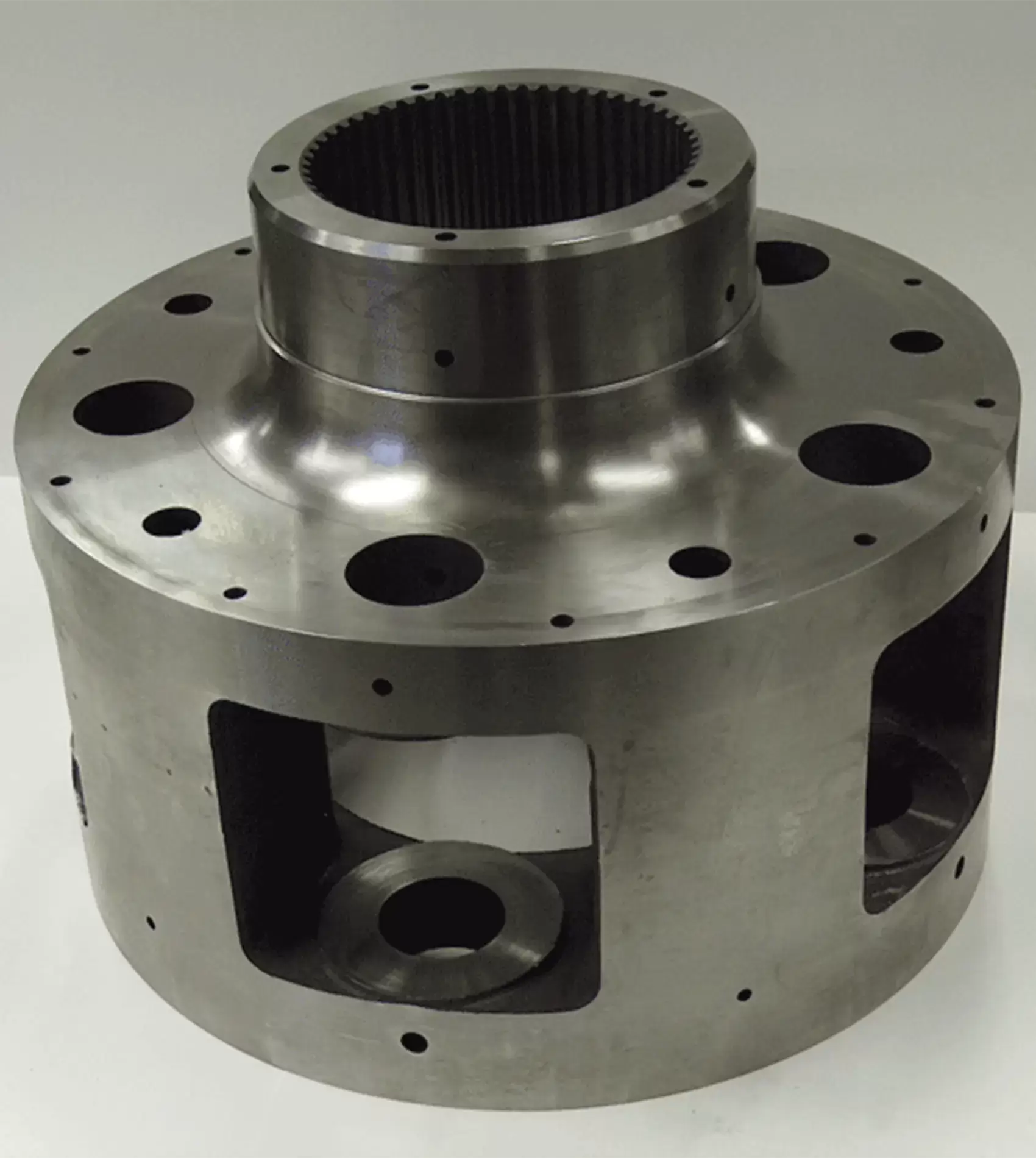
Manufacturing ductile iron components involves a sophisticated process that harnesses the unique properties of ductile iron, a material renowned for its strength, durability, and versatility. The manufacturing process typically begins with the melting of high-quality scrap iron and steel in a furnace, followed by the addition of carefully selected alloying elements such as magnesium and silicon to promote the formation of graphite nodules within the iron matrix. This nodular graphite structure is what distinguishes ductile iron from its grey iron counterpart, imparting superior mechanical properties, including higher tensile strength, ductility, and impact resistance. Once the molten metal achieves the desired composition, it is poured into molds, where it solidifies into the desired component shape. Post-casting processes such as heat treatment, machining.
Ductile iron components offer a unique blend of high tensile strength, impact resistance, and machinability, making them ideal for demanding engineering applications.
Ductile iron exhibits superior mechanical properties compared to traditional gray iron. Its nodular graphite structure imparts excellent tensile strength, yield strength, and elongation, making it well-suited for applications requiring high strength and toughness, such as automotive components, machinery parts, and infrastructure components.
Ductile iron components are known for their excellent machinability, allowing for easy shaping, drilling, and tapping during manufacturing processes. This characteristic enhances the efficiency of production operations and enables the fabrication of complex geometries with tight tolerances, reducing overall production costs.
The microstructure of ductile iron, combined with the proper selection of alloying elements and heat treatment processes, results in enhanced wear resistance. This makes ductile iron components suitable for applications subjected to abrasive wear, such as pump housings, hydraulic cylinders, and agricultural equipment.
Ductile iron possesses superior damping capacity compared to other metallic materials, which is beneficial in reducing noise, vibration, and fatigue in mechanical systems. This feature makes it an ideal choice for components in automotive suspension systems, machinery foundations, and precision instruments.
Ductile iron components can be engineered with enhanced corrosion resistance through alloying and surface treatments. This makes them suitable for applications in corrosive environments such as marine, chemical processing, and wastewater treatment facilities, where traditional materials may be susceptible to degradation.
Ductile iron offers designers flexibility in component design due to its excellent castability and ability to achieve complex shapes with thin walls and intricate details. This versatility allows for the optimization of component performance while minimizing material usage and production costs.

Ductile iron is readily machinable, allowing for intricate shapes and tight tolerances to be achieved with relative ease. This machinability contributes to cost-effectiveness and efficient production processes, particularly in high-volume manufacturing environments.

Ductile iron demonstrates superior fatigue resistance compared to materials like aluminum or certain steel alloys. This property is crucial for components subjected to cyclic loading or dynamic stress, such as crankshafts, camshafts, and suspension components in automotive applications.

Ductile iron offers good corrosion resistance, particularly in comparison to gray cast iron. However, in aggressive environments with high levels of moisture, chemicals, or salt, corrosion can still occur over time. Proper surface treatments such as coatings or cathodic protection can enhance its corrosion resistance.