
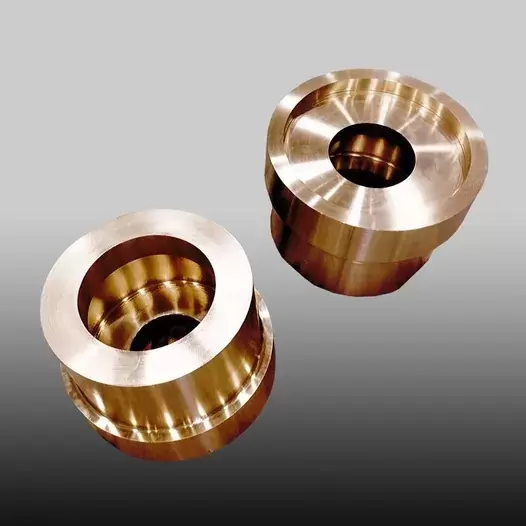
The manufacturing of brass casting components involves a meticulous process that combines traditional craftsmanship with modern manufacturing techniques. Brass, a copper-zinc alloy renowned for its malleability, corrosion resistance, and aesthetic appeal, undergoes casting to produce intricate components for a myriad of applications. Initially, the raw materials, typically copper, zinc, and small amounts of other elements for alloy modification, are melted in a furnace to form a molten brass alloy. This alloy is then poured into molds, either made of sand, ceramic, or metal, depending on the complexity of the component.
Brass casting components offer a blend of aesthetic appeal, corrosion resistance, and excellent machinability for diverse applications in industries ranging from plumbing to decorative art.
Brass casting components exhibit excellent resistance to corrosion, particularly in environments where moisture, chemicals, or salt exposure is prevalent. This property makes brass ideal for applications subjected to outdoor or corrosive conditions, such as marine equipment, plumbing fixtures, and decorative hardware.
Brass has a distinct golden hue that lends an attractive appearance to casting components. Its warm color and lustrous finish make it a popular choice for decorative and architectural applications, including ornamental fixtures, artistic sculptures, and furniture hardware.
Brass is known for its excellent machinability, allowing for the production of intricate and precise components with ease. Its low friction characteristics and ability to form fine chips during machining result in efficient production processes and high-quality finished products.
Brass possesses good electrical conductivity, making it suitable for electrical and electronic applications where efficient transmission of electrical signals or currents is essential. Components such as connectors, terminals, and electrical contacts benefit from brass's conductivity and reliability.
Brass casting components offer a balance of strength and ductility, providing structural integrity and resistance to mechanical stresses. Components such as valves, fittings, and pump housings can withstand operating pressures and loads while maintaining dimensional stability and performance over time.
Brass casting components can be easily joined using various methods, including soldering, brazing, and welding. This versatility allows for the assembly of complex systems and structures, facilitating efficient manufacturing and installation processes.

Brass casting components can achieve a smooth, aesthetically pleasing surface finish, enhancing their visual appeal and marketability. Finishing techniques such as polishing, plating, or powder coating further improve the surface quality and provide additional protection against corrosion and wear.

Brass casting processes, such as sand casting or investment casting, offer high precision and dimensional accuracy, allowing for the production of complex shapes and intricate details with tight tolerances. This precision ensures proper fit and function of brass components in assemblies and contributes to overall product performance.

Brass casting components exhibit favorable mechanical properties, including good tensile strength, ductility, and machinability. These properties enable ease of fabrication and assembly while ensuring reliable performance in applications subjected to mechanical loading and stress.